Sewing and Embroidery Tools Vector Icons Review
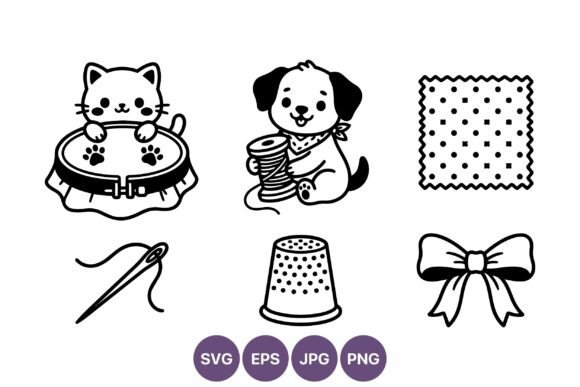
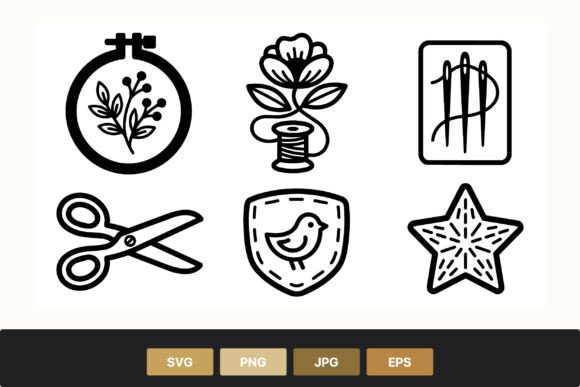
As a professional embroidery designer who constantly evaluates digital assets for both client work and my own small business merchandise, I approach every new graphic collection with a critical eye. When I first opened the Sewing and Embroidery Tools Vector Icons, I wasn't just looking at pretty pictures; I was mentally digitizing them. This collection of black and white line art features an embroidery hoop with a leafy branch, a flower intertwined with a thread spool, a classic needle and thread, scissors, a bird patch, and a stitched star. While categorized as Illustrations and Graphics, these elements serve a dual purpose for makers: they are excellent branding assets for digital listings and, more importantly, potential candidates for physical stitching.
First Impressions: Line Art Meets Stitch Reality
The immediate mood of this collection is nostalgic yet clean. The line art style suggests a minimalist aesthetic that is currently trending in the handmade market. From a digitizer’s perspective, black and white vector lines are often the easiest to convert into machine embroidery designs because the pathing is already defined. However, simplicity can be deceptive. The "stitched star" and "needle with thread" icons rely entirely on line quality. In a digital format, a line is just a pixel width; in embroidery, that line must translate to a satin stitch or a running stitch without losing its charm.
I appreciate that the icons avoid excessive shading or gradients. This makes the Sewing and Embroidery Tools Vector Icons highly versatile for single-color embroidery projects. For a crafter or Etsy seller, this means reduced thread changes and faster production times. The visual personality feels authentic to the fiber arts community, avoiding the generic clip-art look that can sometimes devalue a handmade product. These graphics feel like they belong on a linen tea towel or a canvas tote bag design rather than just a website header.
Real-World Application: Branding a Custom Tote Bag Line
To truly evaluate this collection, I considered a specific scenario relevant to many creative entrepreneurs: launching a line of branded tote bags for a craft fair or online shop. I envisioned using the "embroidery hoop with leafy branch" icon as a pocket placement or a subtle tag design on natural cotton canvas.
In this context, the design performs exceptionally well. Canvas provides a stable fabric texture that supports crisp line work. Because the icon is monochromatic, it allows the natural color of the fabric to shine through, creating a high-end, boutique feel. Customers browsing Etsy listings often respond better to this type of understated elegance compared to loud, multicolored designs. Using the "scissors" or "flower with thread spool" icon as a secondary element on the back of the bag creates brand consistency without overwhelming the user. This is where digital embroidery files derived from these vectors add tangible value to commercial embroidery ventures.
Furthermore, these icons solve a common problem for digital product sellers. If you sell printable mockups or design assets, having cohesive, professionally drawn illustrations helps build buyer trust. The same graphic used to brand your physical sweatshirt embroidery can be used in your listing photos, creating a seamless experience between your digital presence and your finished product.
Navigating Fabric Challenges and Technical Limits
While the Sewing and Embroidery Tools Vector Icons are versatile, they require careful consideration regarding placement and substrate. Not every icon works on every surface. As an experienced reviewer, I must highlight where caution is necessary.
- Stretchy Fabrics: The detailed "bird patch" and intricate leaf veins in the hoop icon may distort on knit fabrics or stretchy apparel. If applying these to a t-shirt or baby clothes, you must use appropriate stabilizer and potentially simplify the design to prevent puckering.
- Small Hoop Sizes: Reducing line art too much can result in thread breaks or muddy details. The "stitched star" might lose its definition if scaled down below 1 inch. Always verify the minimum size before committing to a tiny collar or cuff placement.
- Textured Surfaces: On terry cloth towels or fleece blankets, thin running stitches can get lost in the pile. For these items, I would recommend converting the vector lines to thicker satin stitches or using a topping to ensure the design remains visible.
- Dark Fabrics: Since these are black and white line art icons, stitching them on dark navy or black fabric requires inverting the colors or adding a white underlay. Without this adjustment, the design will simply disappear.
Understanding these limitations prevents wasted materials and ensures your personalized gift or custom apparel looks professional. A poorly executed stitch-out damages customer trust far more than a simple design ever could.
Enhancing Perceived Value and Professionalism
Beyond the technical aspects, we must consider how these graphics influence buyer engagement. In the saturated market of handmade goods, presentation is everything. The Sewing and Embroidery Tools Vector Icons offer a sophisticated way to signal "handmade" without screaming it. When a customer sees a beautifully embroidered needle and thread icon on packaging or a garment label, it reinforces the artisan nature of the item.
For those selling digital embroidery files, these illustrations provide ready-made marketing material. You can use them to create attractive cover images for your shop sections or as watermarks on preview images. This elevates the perceived value of your design assets. Consistency across your physical products and digital storefront builds recognition. When a repeat buyer sees that familiar leafy branch or bird motif, they instantly associate it with your quality standards.
Essential Designer Notes Before You Stitch
Before loading any derivative machine embroidery design based on these vectors into your machine, adhere to these practical guidelines. Real-world testing is non-negotiable.
- Test on Scrap Fabric First: Never run a new design directly on a final product. Test the stitch density and tension on a scrap piece of the exact fabric you intend to use. What works on cotton may fail on denim.
- Verify Licensing: Confirm whether the license allows for commercial embroidery or only personal use. If you plan to sell finished products or the digitized files themselves, ensure your rights are clear to avoid legal issues.
- Check Thread Color Contrast: Even though the source is black and white, test different thread colors. A cream thread on oatmeal linen offers a subtle, tone-on-tone look, while black thread on white cotton provides high contrast. Both have different market appeals.
- Inspect Small Details: Zoom in on your embroidery software. Ensure that the gap between parallel lines in the "flower with thread spool" is wide enough for your needle. Lines closer than 0.5mm apart often cause perforation or tearing in lightweight fabrics.
- Mockup Validation: Use printable mockup templates to visualize the scale before stitching. Seeing the icon next to a ruler or a standard pocket size digitally can save hours of hooping and re-hooping.
The Sewing and Embroidery Tools Vector Icons represent a thoughtful intersection of digital illustration and textile application. They possess the clean lines necessary for successful digitization and the thematic resonance required for authentic maker branding. Whether you are creating holiday embroidery gifts, outfitting a small shop product line, or refining your Etsy seller aesthetic, these graphics offer a solid foundation. Just remember that a vector file is only a blueprint; your expertise in stabilizer selection, hoop size management, and fabric pairing is what transforms a simple line drawing into a cherished handmade treasure. Approach this collection with technical mindfulness, and it will serve your creative business well.